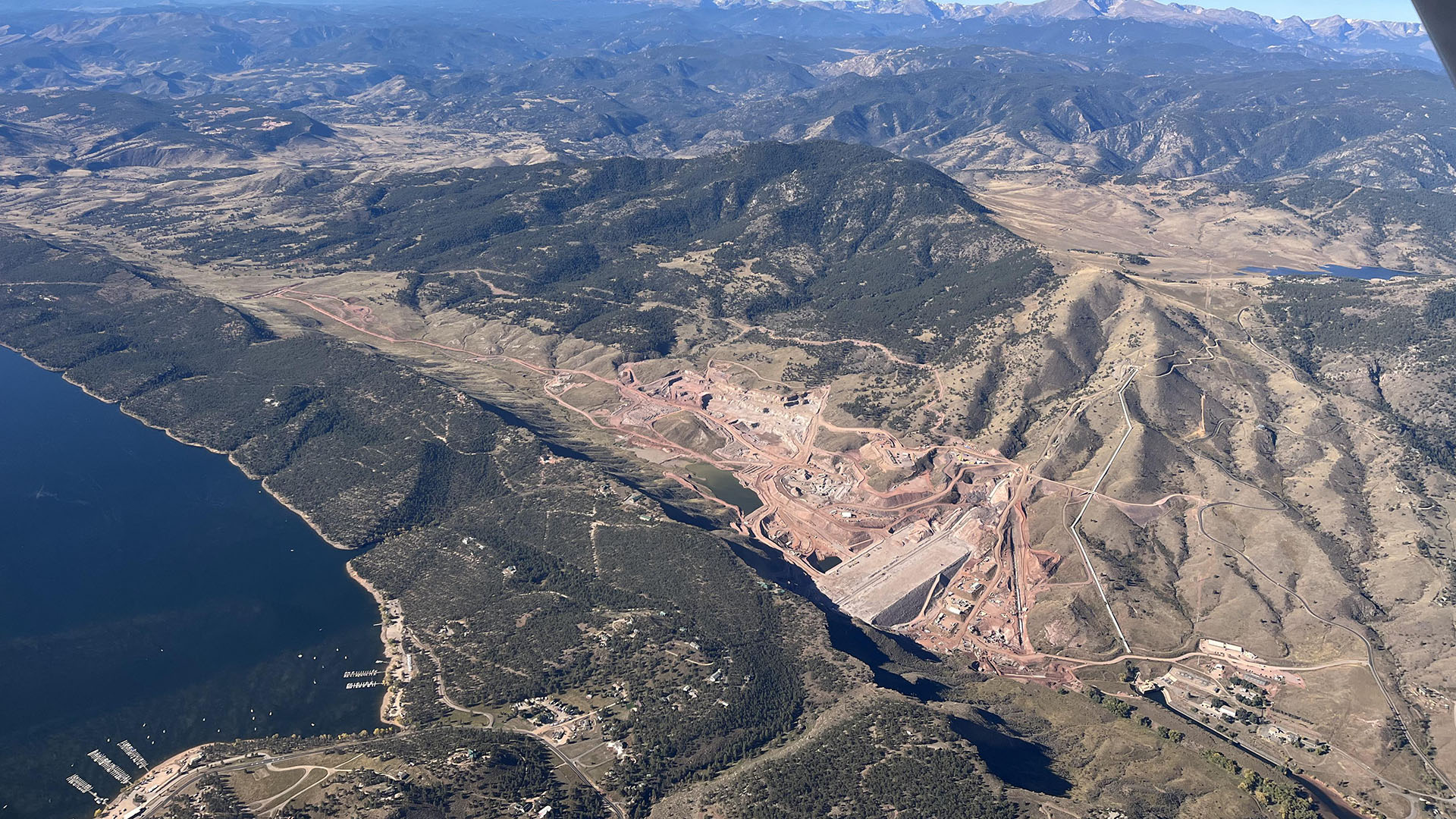
Chimney Hollow Reservoir includes many project components that work together to store and deliver water.
Main Dam
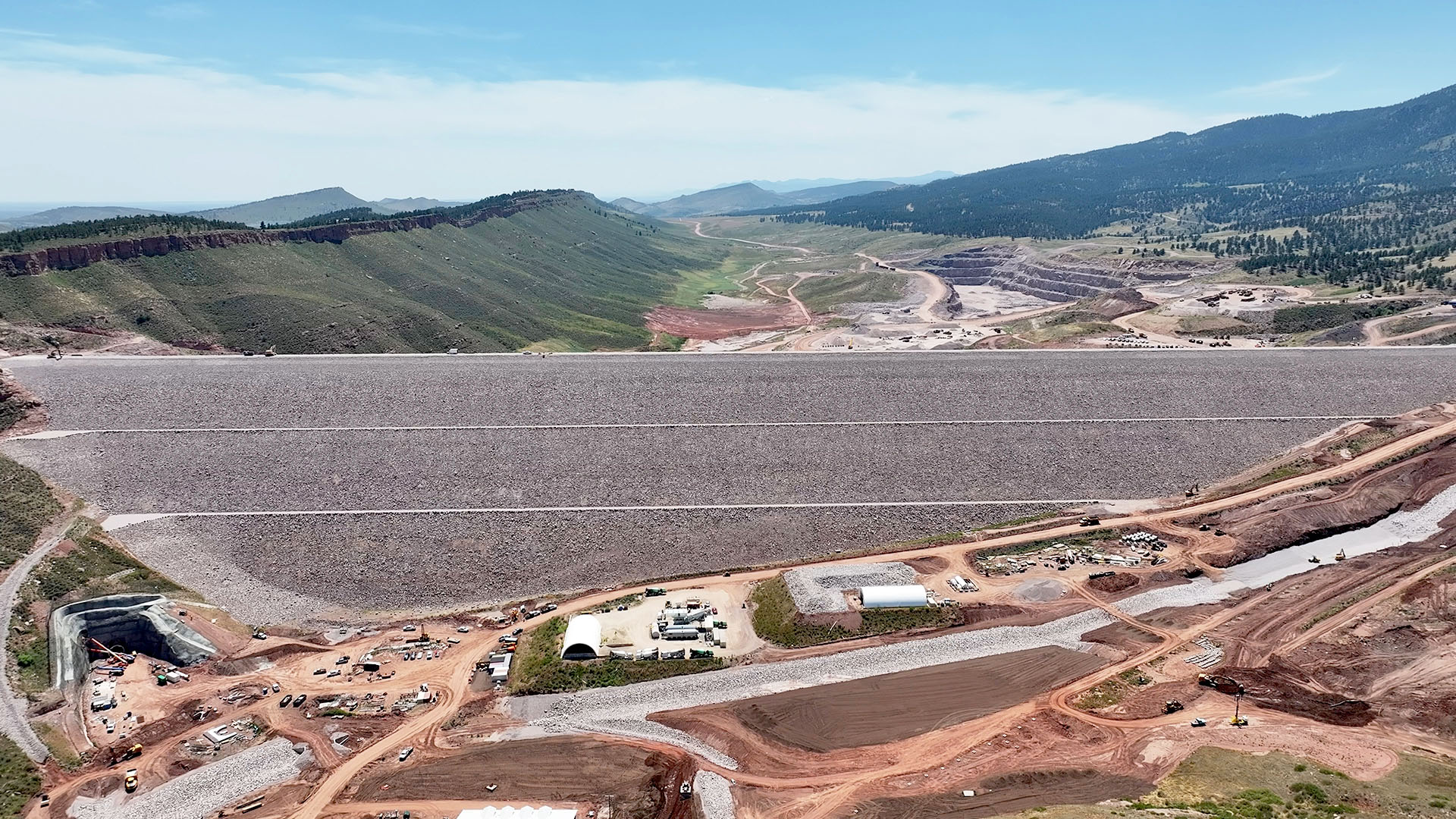
The Chimney Hollow main dam on the north end of the reservoir is a 350-foot-tall rockfill structure featuring a hydraulic asphaltic concrete (HAC) core. It is the tallest new dam built in the United States in the last 25 years and only the second asphalt core dam in the country. An asphalt core dam was selected because the reservoir footprint lacks sufficient fine-grained clay needed for a traditional clay core dam, such as those in Carter Lake and Horsetooth Reservoir. Unlike paving asphalt, HAC is specifically engineered to create a flexible, very low permeability core. This technology is proven effective, with more than 200 asphalt core dams constructed worldwide and decades of safe operations.
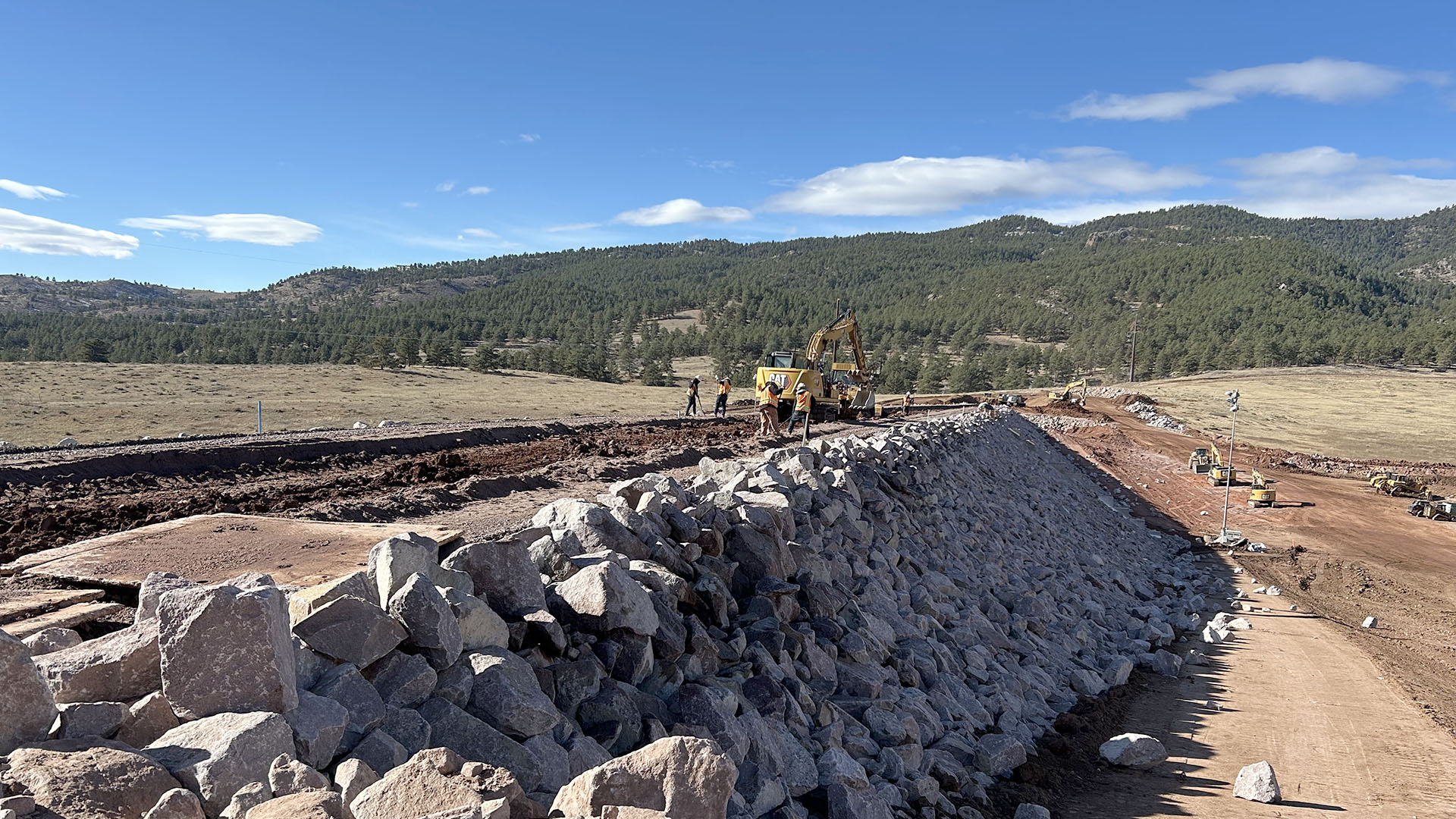
The main dam contains approximately 10 million cubic yards of rockfill and 75,000 cubic yards of HAC. Rockfill and aggregates were sourced from within the reservoir footprint and the HAC was batched on site. It also includes a two-row grout curtain and blanket grouting to strengthen the foundation and reduce seepage. This work involved drilling holes up to 230-feet below the foundation of the dam and pumping Portland cement grout into the holes to seal any cracks and fissures in the bedrock. This also helps to prevent consolidation of the foundation under the weight of the main dam.
Saddle Dam
The saddle dam at the south end of Chimney Hollow Reservoir plays a critical role in achieving the reservoir’s full 90,000 acre-feet of storage capacity. Although it impounds only about 30 feet of water, the reservoir’s large surface area — about 740 acres at this elevation — allows the saddle dam to contribute over 30 percent of the reservoir’s available volume.
The structure is a clay-core rockfill dam, similar in design to Carter Lake and Horsetooth Reservoir dams. It is about 40 feet tall and 1,250 feet long and contains approximately 100,000 cubic yards of rockfill and 30,000 cubic yards of clay. Like the main dam, it also includes a double-row grout curtain with this one extending approximately 70-feet below the dam foundation to seal the foundation.
Spillway
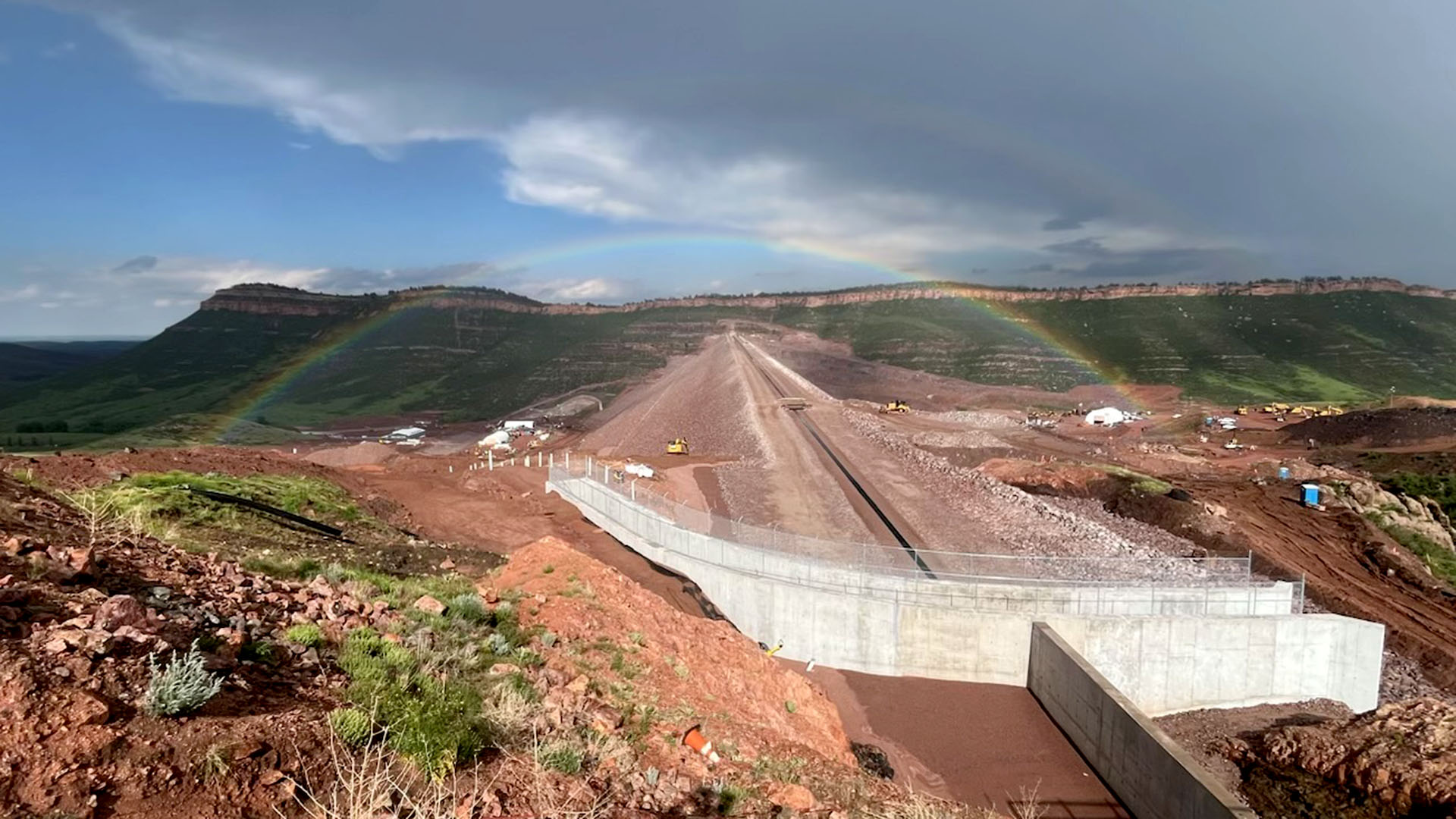
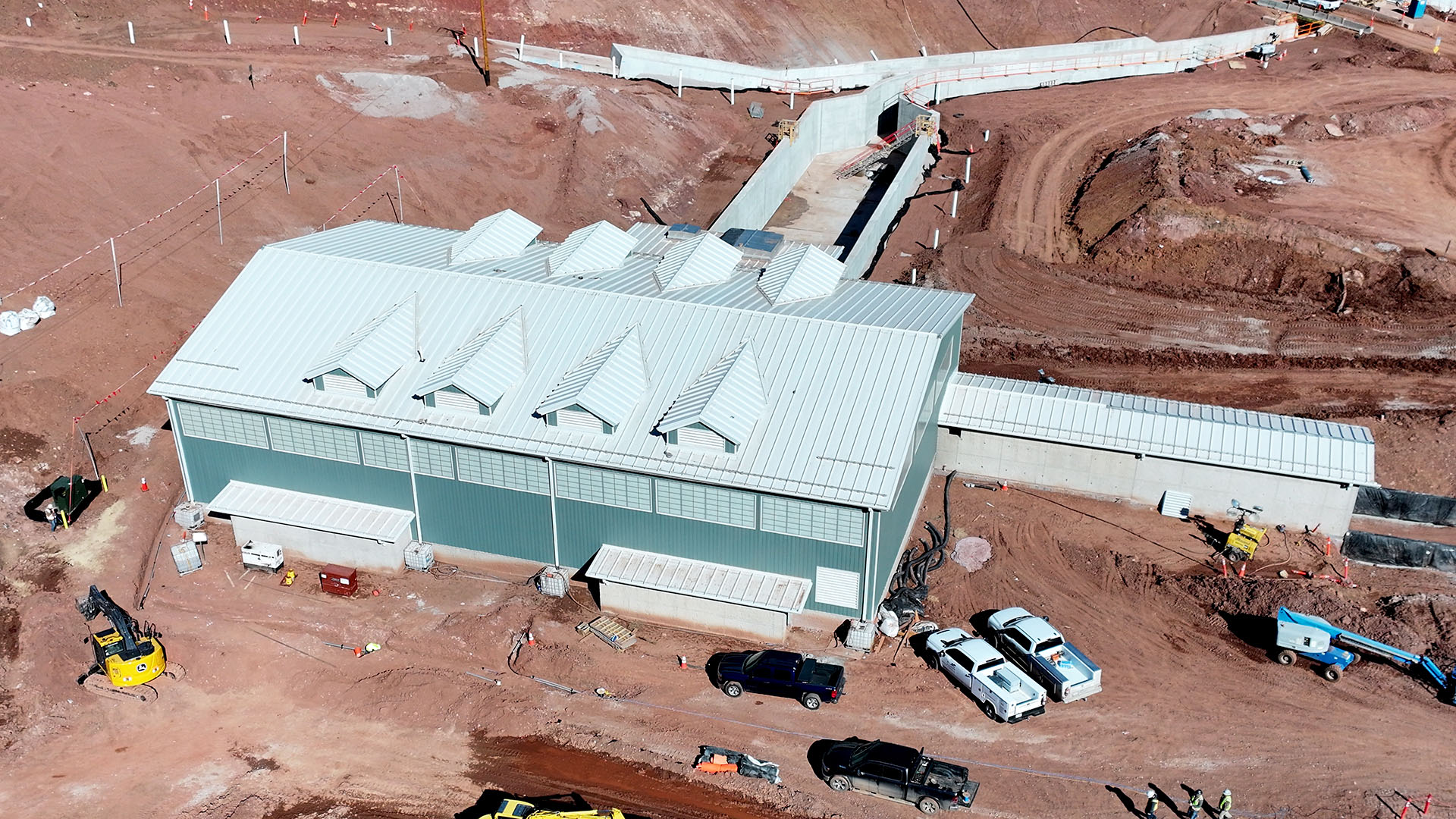
A reinforced concrete spillway was constructed on the left (west) abutment of the main dam to safely convey storm events around the main dam embankment. The spillway is designed to pass flows associated with the probable maximum flood (PMF) storm event. The PMF estimate for Chimney Hollow incorporates current climate change impacts into the estimate to make sure that the dam remains safe into the future. Because Chimney Hollow Reservoir is an off-channel reservoir, and not located on a major river system, the spillway is quite small relative to the size of the main dam. The spillway has a 10-foot-wide chute, approximately 3,800 feet long that contains about 12,000 cubic yards of reinforced concrete, all produced on site. Most of the spillway was constructed below the existing ground surface to keep the spillway on a solid rock foundation and help with the aesthetics of the site.
Inlet/Outlet Works
One of the advantages of Chimney Hollow Reservoir is its adjacent location to the Colorado-Big Thompson (C-BT) Project, which allows water to be moved into and out of Chimney Hollow Reservoir using existing infrastructure. Through an agreement with the U.S. Bureau of Reclamation, the Municipal Subdistrict can allow water to flow into Chimney Hollow Reservoir when there is available capacity in the C-BT Project infrastructure.
Bald Mountain Interconnect
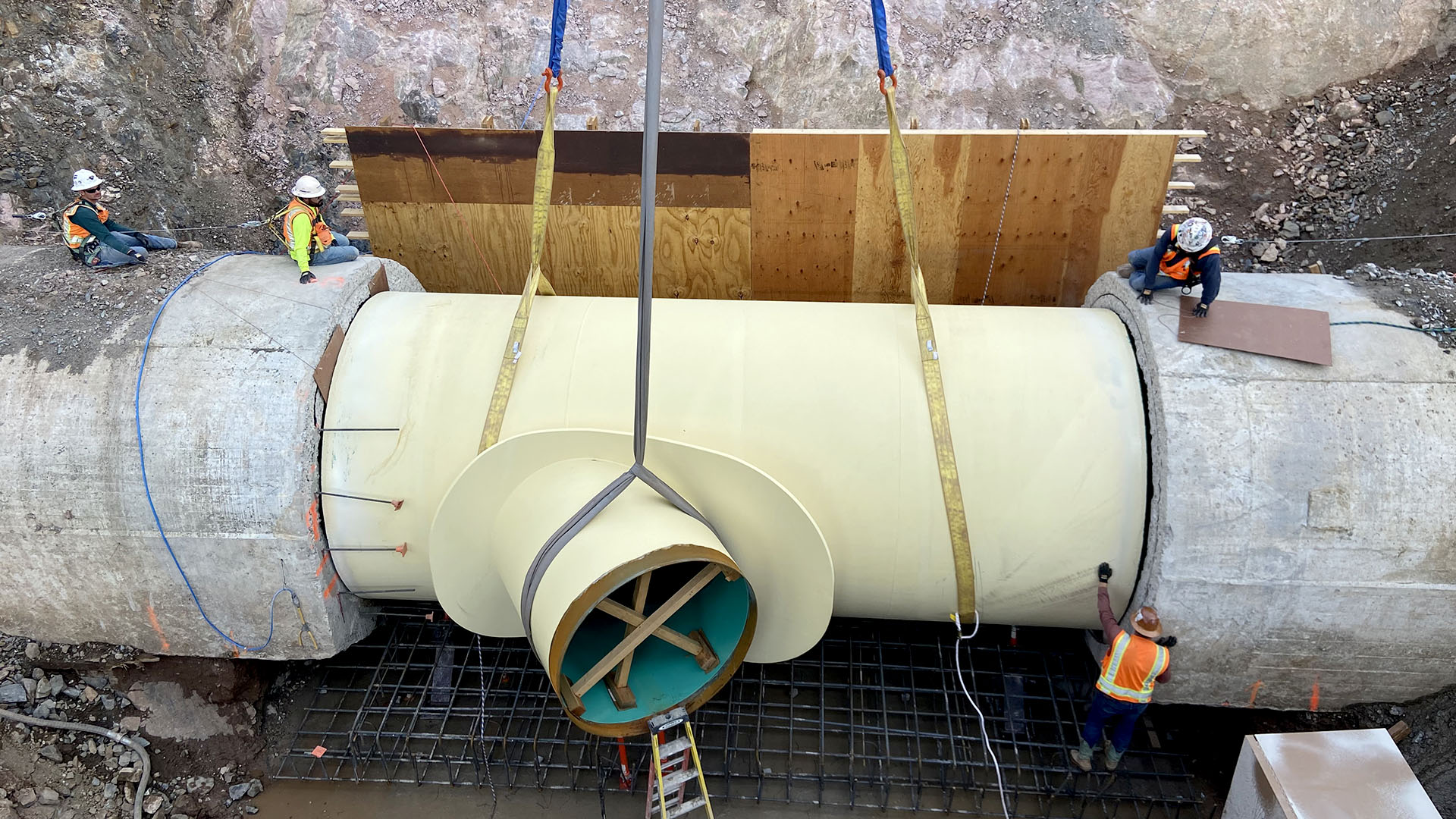
To enable reservoir operations, construction crews tapped into the existing Bald Mountain Tunnel. A steel wye was installed, encased in concrete and equipped with a butterfly valve so that Chimney Hollow Reservoir can be isolated from the C-BT Project if necessary.
Chimney Hollow Conduit
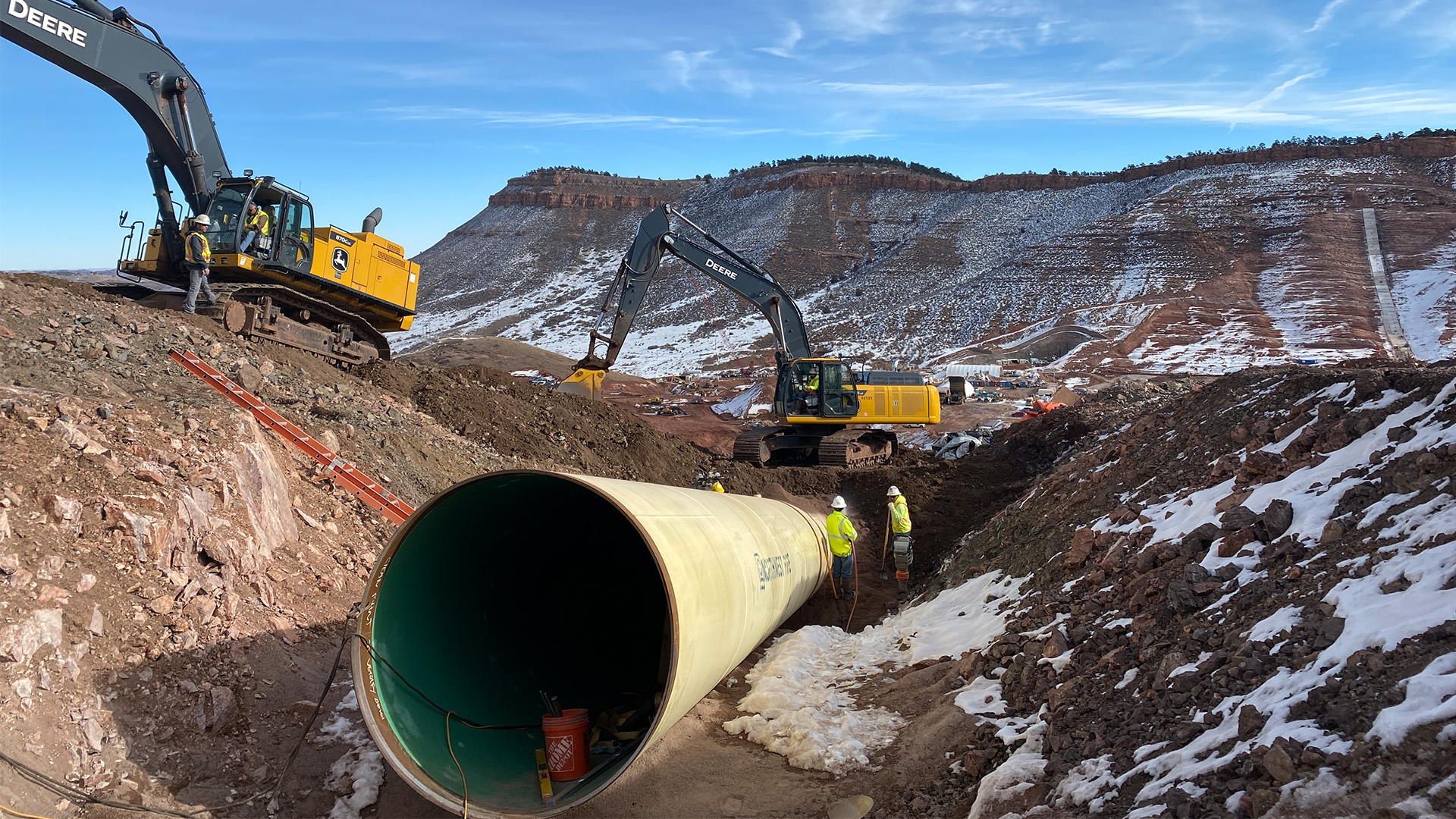
The Chimney Hollow Conduit is a buried steel pipe approximately 1 mile that brings water from the existing CB-T Project infrastructure into Chimney Hollow Reservoir. The Chimney Hollow Conduit also provides an alternative and back up means to fill Carter Lake.
Valve House
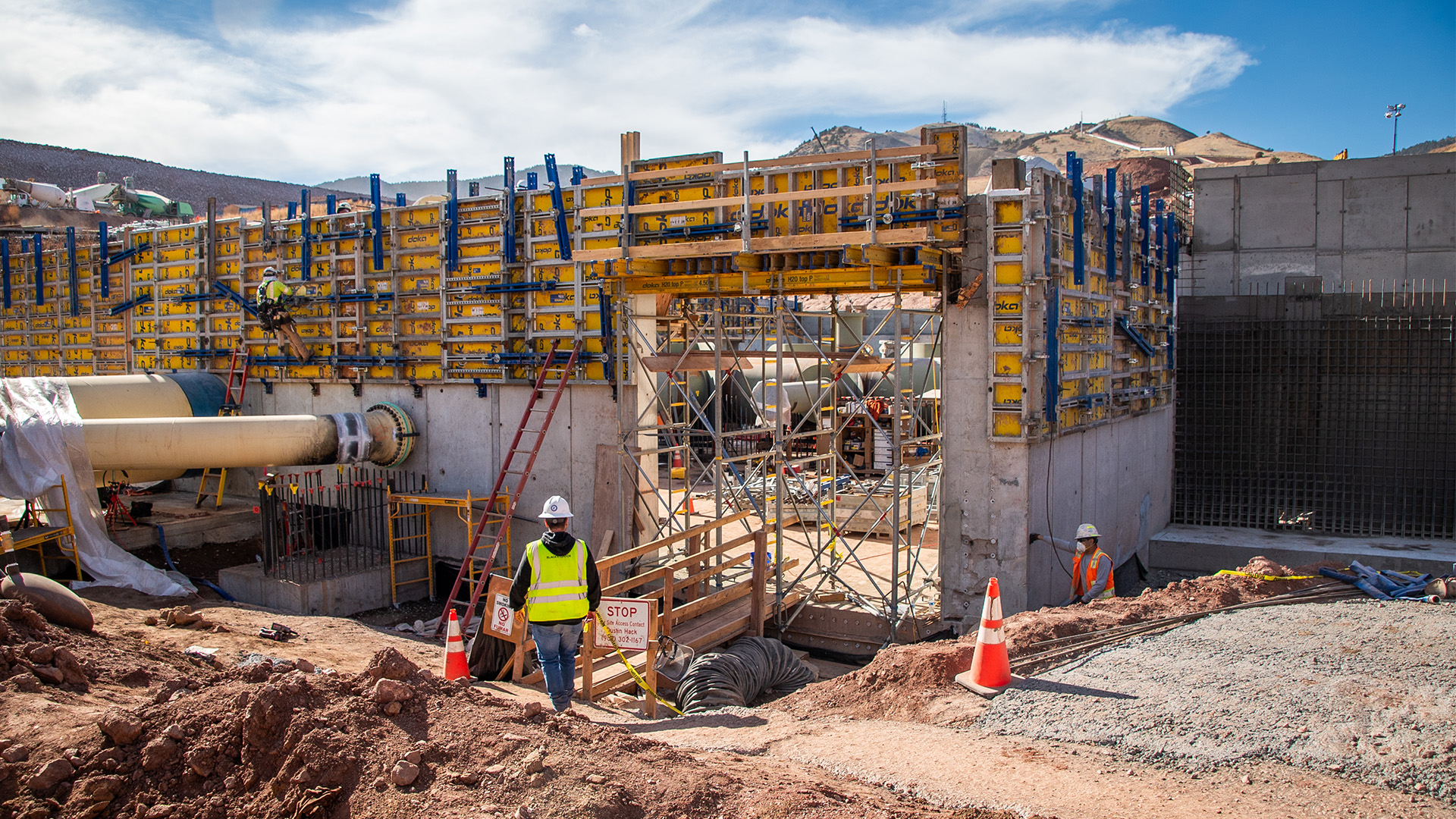
Pressures and flows between the C-BT Project and Chimney Hollow Reservoir are controlled in the valve house, located at the downstream toe of the main dam. The facility is approximately 120-by-120-feet, rises four stories tall though mostly underground.
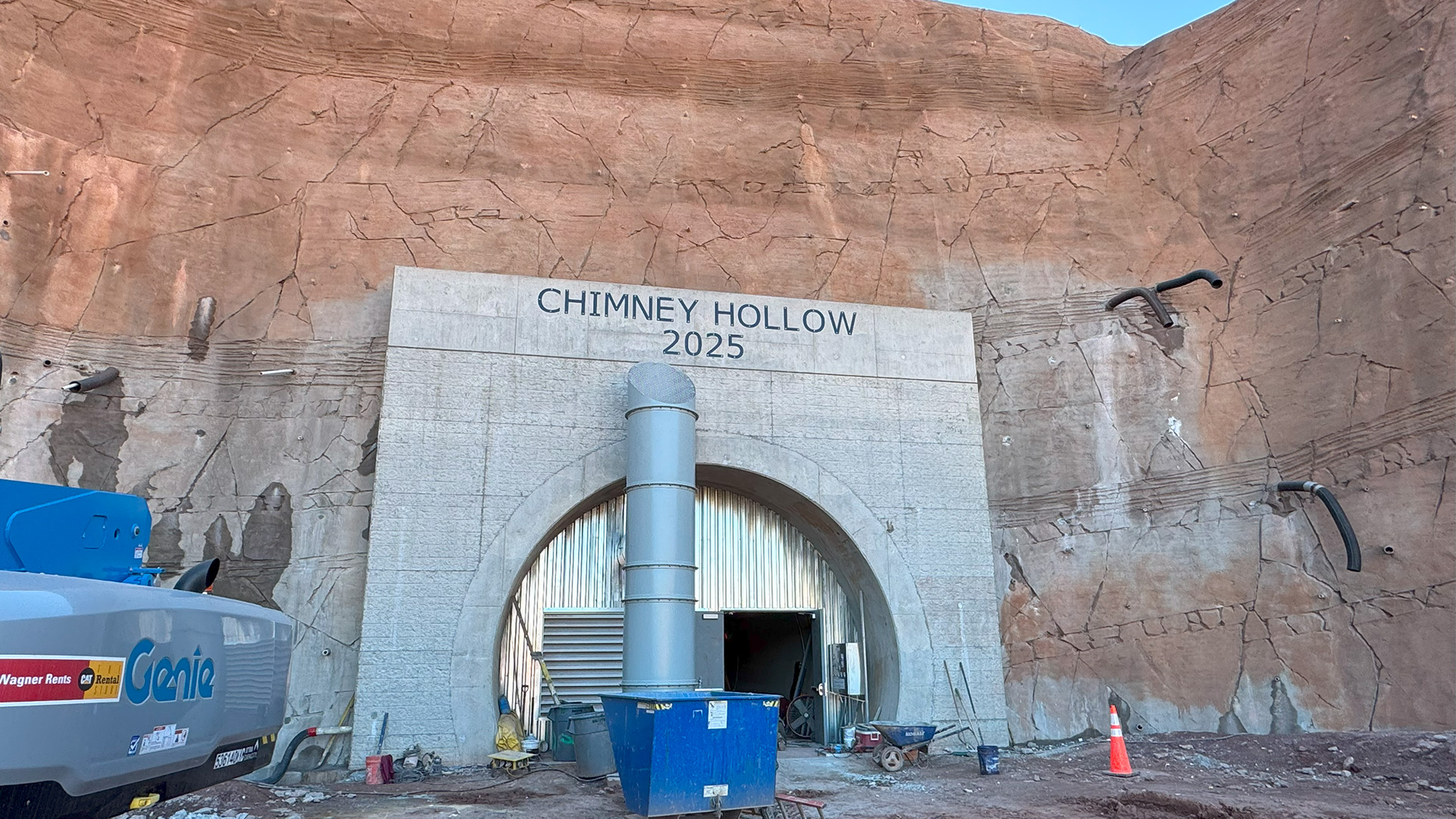
Inlet/Outlet Tunnel
Water enters and exits Chimney Hollow Reservoir through a steel conduit built within a 2,000-foot-long tunnel constructed under the right (east) abutment of the main dam. Water is gravity fed moving in and out of the reservoir.
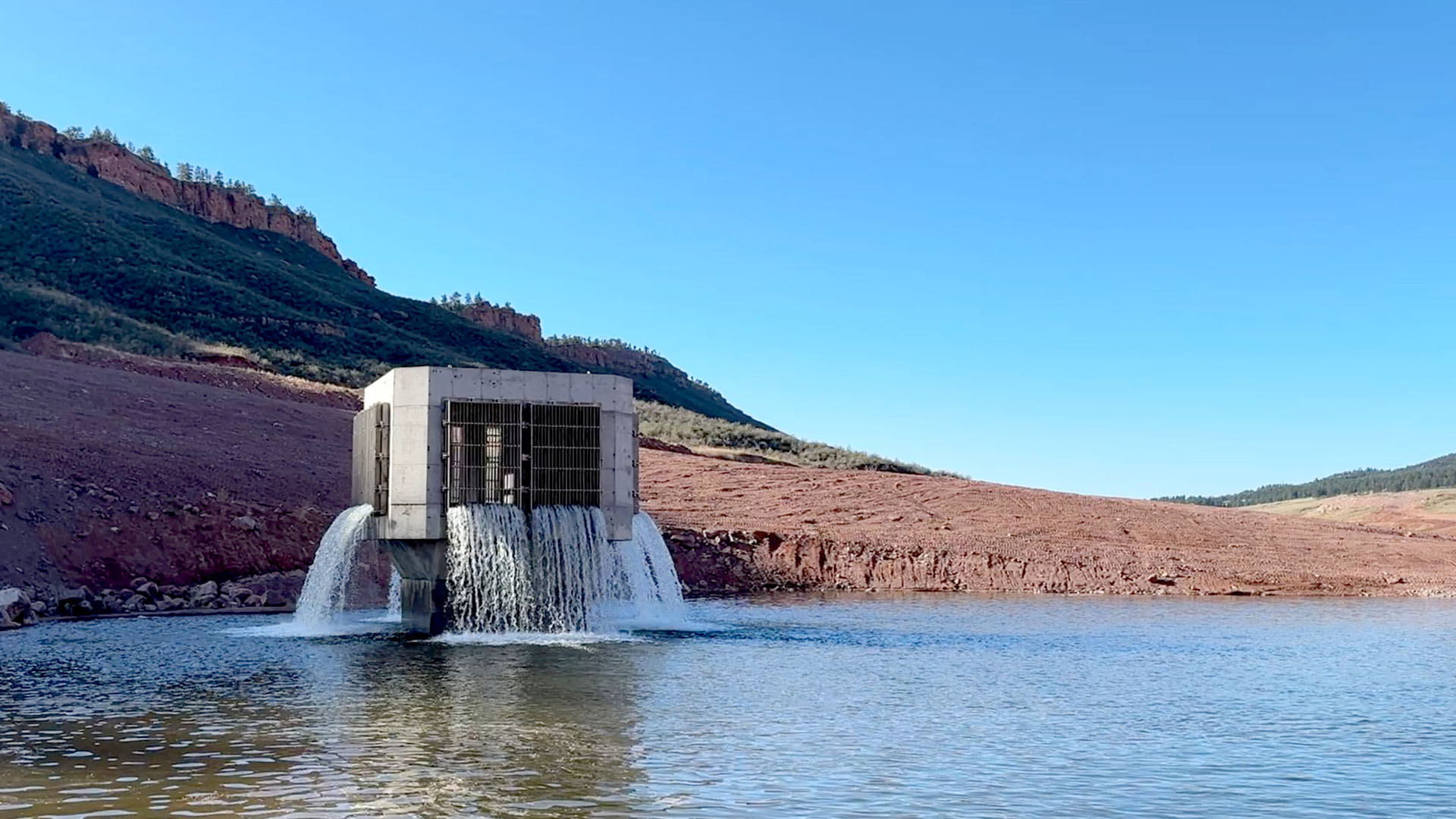
Inlet Outlet Tower
A submerged reinforced concrete tower was constructed to support reservoir operations and maintenance. The tower creates a dead storage space in the bottom of the reservoir where sediment and debris can accumulate clogging up conveyance infrastructure.