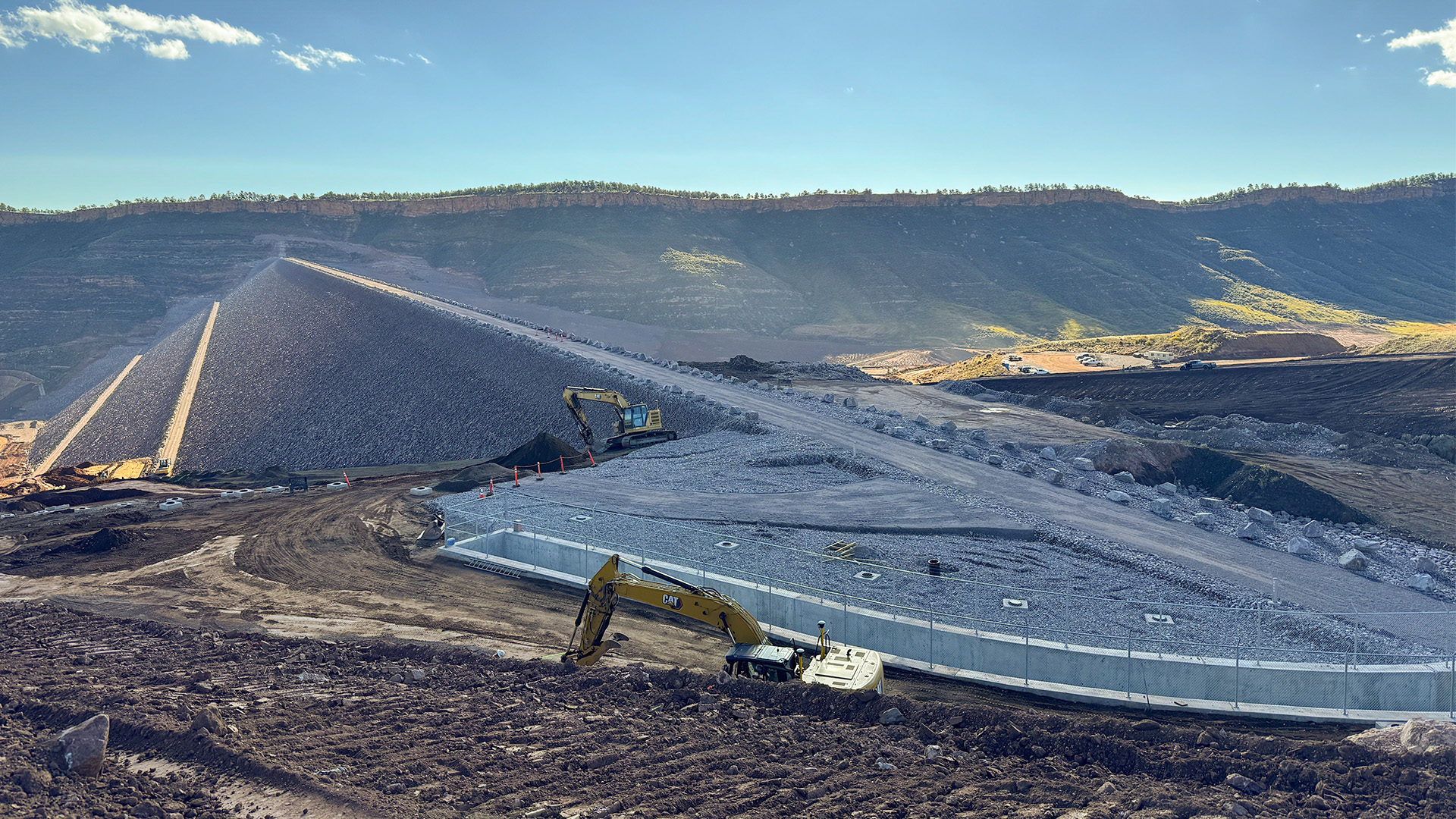
Barnard demonstrated an unwavering commitment to safety throughout four years of construction on Chimney Hollow. With over 3.4 million work hours logged, the project achieved an average Total Recordable Incident Rate (TRIR) of 1.4, significantly lower than the industry average of 2.6. Impressively, Barnard maintained a TRIR of less than 1.0 for the last two years, with no fatalities and only one lost-time injury during the entire project. These results reflect a culture where safety is not just a priority—it’s a core value.
The work completed over the last four years stands as a testament to the perseverance and dedication of everyone involved, not only during construction, but also throughout the two decades of permitting and planning that made this project a reality.
Although initial plans called for water placement in the reservoir to begin in November, Northern Water and project participants are continuing water quality assessments near the site to address the presence of mineralized uranium identified earlier this year in the dam’s embankment. This work, which must be completed while the reservoir remains empty, will require additional time. The naturally occurring uranium was found in granitic rock quarried for construction of the Chimney Hollow Reservoir dam. Mineralized uranium is a common feature in certain Colorado geological formations.
As the reservoir begins to fill, close monitoring and management will be essential, as the exposed rocks will come into direct contact with the water, leading to some uranium leaching. The leaching process is expected to decrease over time, although it is currently uncertain how long it will take. Staff and project participants are working diligently to collect data and explore operational strategies to address this temporary challenge. No water will be delivered from Chimney Hollow Reservoir until assessments are complete and a mitigation plan is developed to ensure a safe raw water supply.