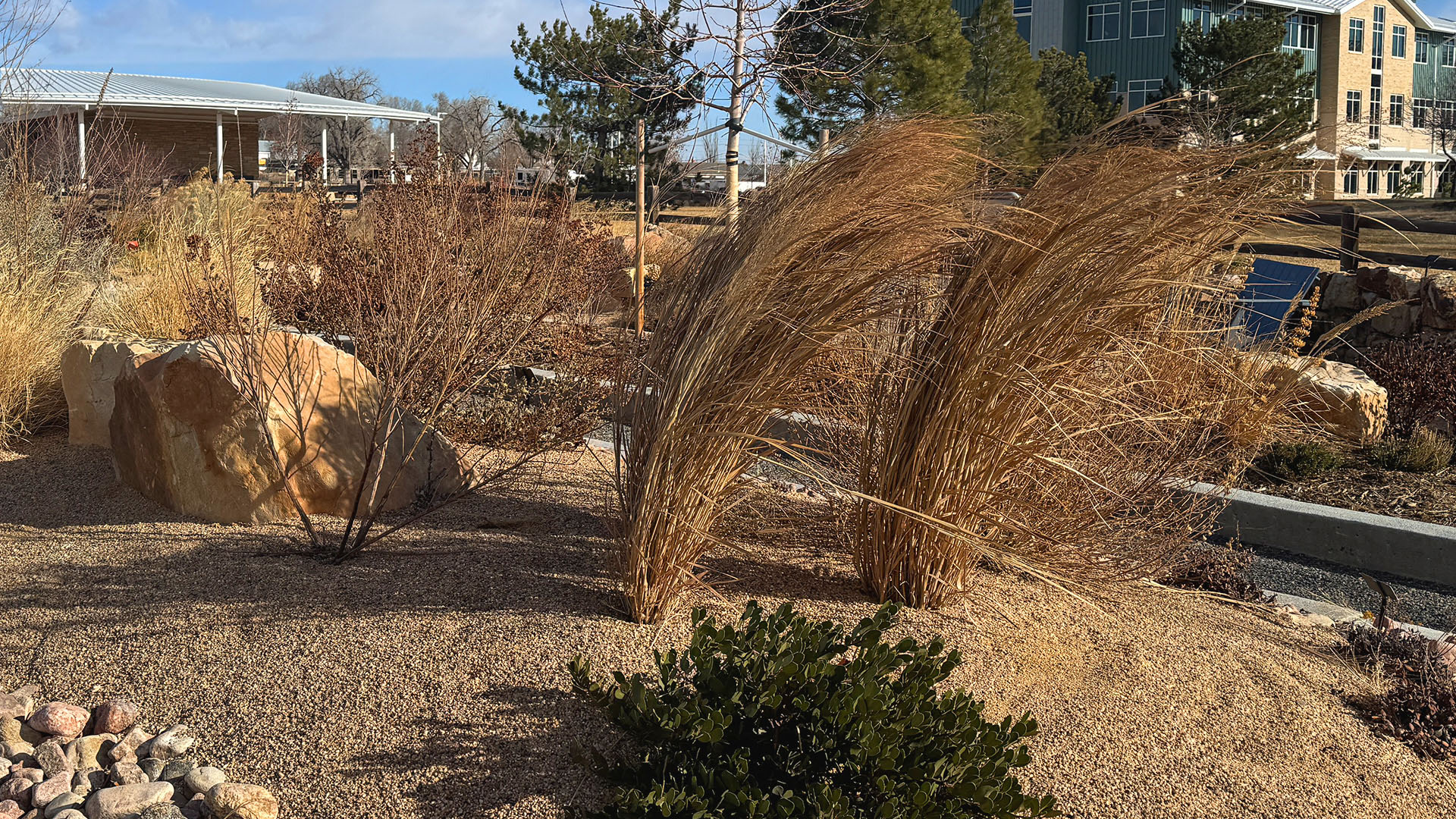
Although the calendar marks winter, Northern Colorado typically sees far less snowfall than the higher elevations of the Rocky Mountains. Along the Front Range, stretches of dry, sunny and windy weather are common during winter months, which can stress outdoor plants. Watering is especially important during winter dry spells. With a few simple steps, you can help keep landscaping healthy, strong and ready to bloom when spring arrives.
“Winter watering is especially important this year as we have had very little precipitation in the region and temperatures have been unreasonably high, paired with significant wind events,” said Northern Water’s Water Efficiency Specialist Lindsay Nerad. “Skipping the winter watering this year could damage plants, and you won’t notice the damage until spring. Plants that survive a dry winter may leaf out later, grow slowly and could be more vulnerable to pests and disease.”
If your area has gone more than one month without significant precipitation (at least one inch), it’s time to hand water with a hose. Make sure the ground isn’t frozen and there is no snow cover. Winter watering is recommended from October through March, or until consistent warm weather returns. Choose a day when temperatures are above 40 degrees, and water midday to allow the water to soak in to the soil before the temperatures drop overnight.
When watering trees, start at the base of the tree and make sure to water out to the full drip line, or the longest branches in the tree canopy. To help insulate the tree roots, apply 2 to 4 inches of wood mulch at the base of the tree. Keep mulch a few inches away from the trunk to prevent excess moisture resting directly against the tree.
Pro tips:
- A few gallons of water can go a long way in the winter. Don’t overwater or saturate.
- South- and west-facing areas need a little more water because they receive more sun and dry out faster.
- Winter is the ideal time to prune most trees. The spread of disease is less likely when trees are dormant, and lack of foliage makes it easier to see which limbs need attention. Bonus: a properly trimmed tree will fare better when heavy spring snowfalls weigh on branches.