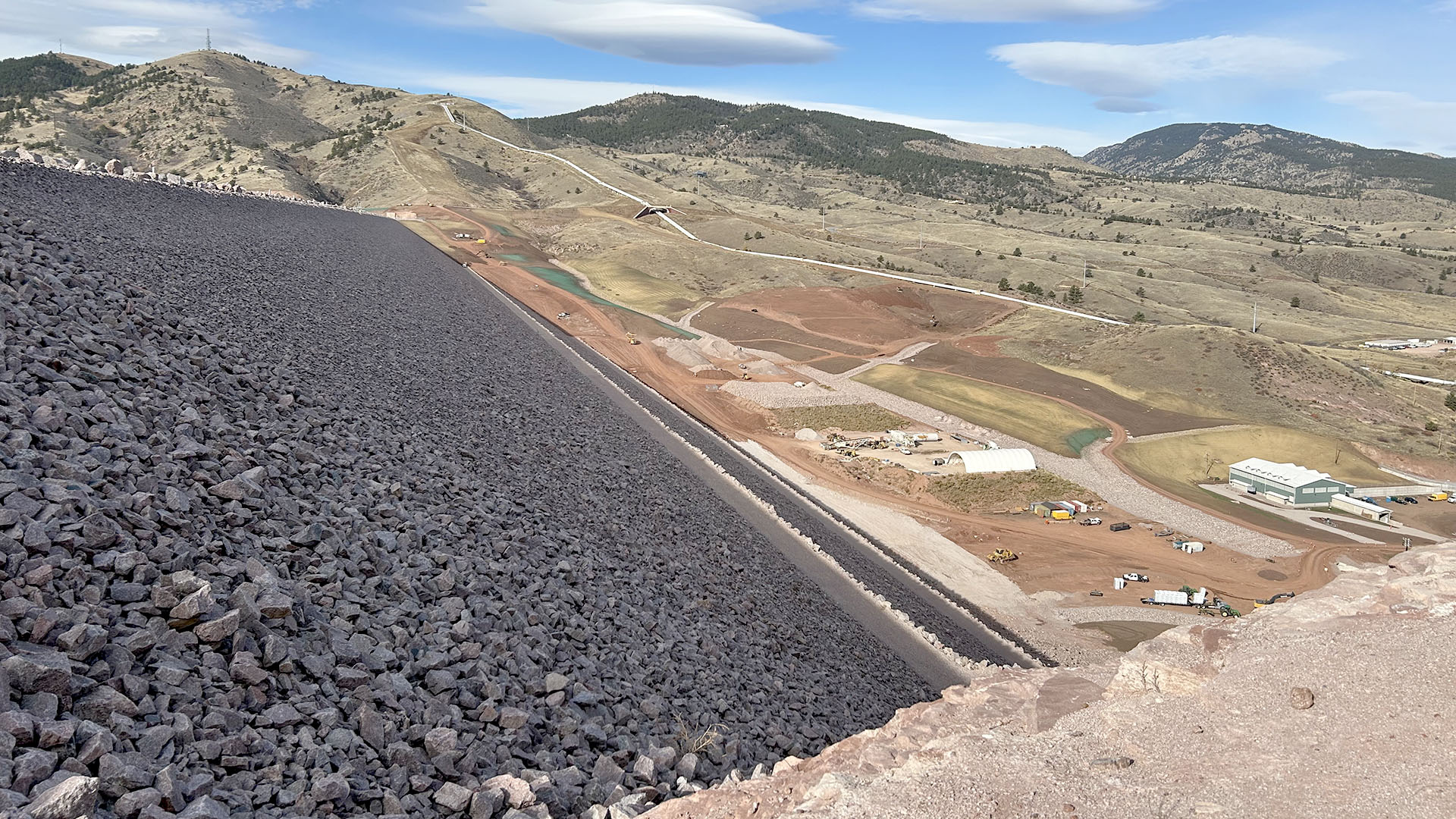
Northern Water discovered uranium at the Chimney Hollow Reservoir site in the rocks quarried on site, which were used to form the majority of the dam structure. When the reservoir is filled, and the rocks are immersed in water, uranium will leach from the rock.
Chimney Hollow Water Quality
Naturally Occurring Uranium Found at Chimney Hollow
Northern Water and Chimney Hollow participants are committed to keeping their customers, stakeholders and end users, as well as the general public, informed as we gather additional information on the discovery of uranium at the Chimney Hollow Reservoir construction site. Collecting data and modeling are crucial steps in the development of mitigation strategies, and we are actively working to learn more by evaluating test results from field investigations and modeling scenarios.
Prior to making management decisions, we want to make sure we have sufficient information to evaluate operational and treatment options. We are following a rigorous process, starting with geochemical characterization and scoping studies. Following these steps allows us to make informed decisions, evaluate trade-offs and determine the best path forward.
Learning. Evaluating. Planning.
Northern Water has been testing how the uranium minerals leach into water and what concentration to expect when the reservoir fills and as its operation begins. To allow time for additional data collection and investigations to advance, we have elected not to fill the reservoir as quickly as initially planned. Northern Water moved approximately 1,500 acre feet of water into Chimney Hollow Reservoir in April 2026. Additional water quality data will now be collected and used to evaluate the performance of model simulations used to predict uranium concentrations in the reservoir. In addition, post-fill dam safety monitoring began. Project participants have not expected or planned for delivery of water to occur for several years, and this postponement will not affect community water supplies.
We expect uranium leaching from the dam to initially increase, then stabilize and ultimately decrease over time, since there is a finite quantity of soluble uranium at the site. The duration of the leaching process is not fully understood yet and will depend on how the reservoir is operated over time. While the discovery of mineralized uranium has caused Northern Water and the Chimney Hollow participants to modify their plans, it is an issue that can be safely managed. The new reservoir remains an important part of securing water supply needs for Northern Colorado and its future.
Water Quality Monitoring
No water will be released from Chimney Hollow Reservoir until a management plan is identified.
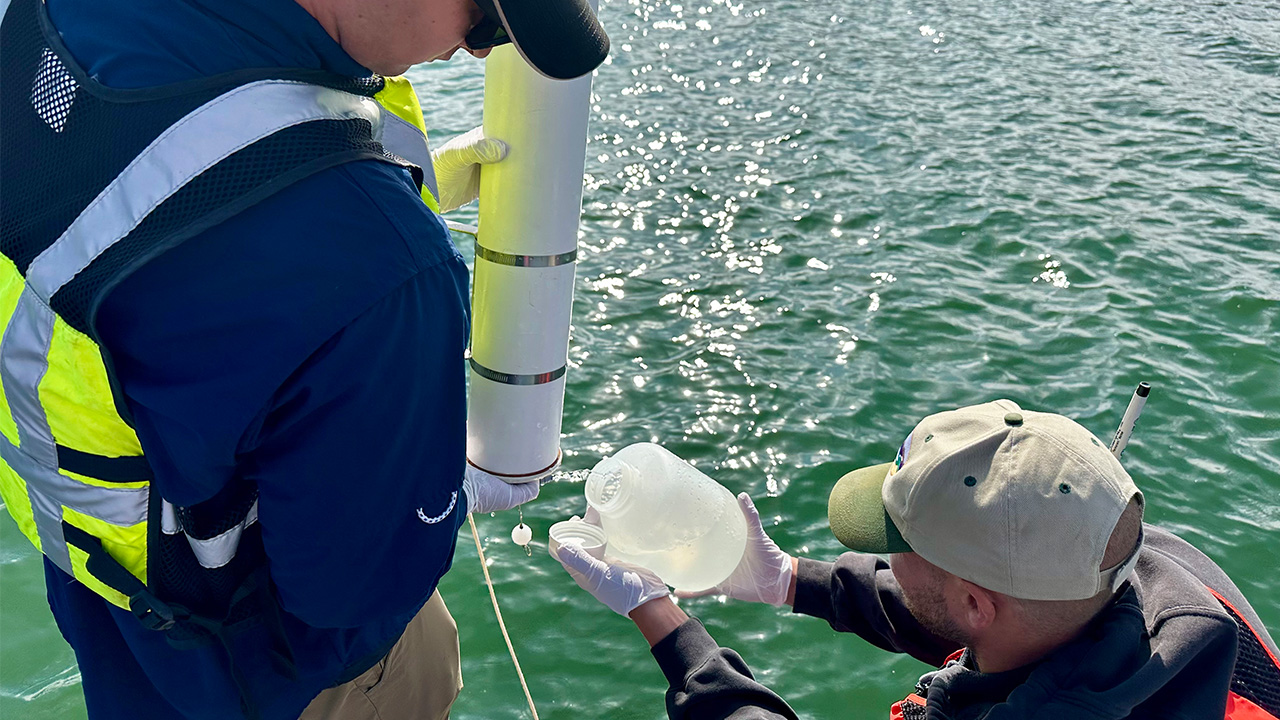
This dashboard displays uranium levels in Chimney Hollow Reservoir and in nearby sampling locations from early April 2026, when water was first introduced into the reservoir. Water sampling for uranium occurs weekly with final results typically available within two months of the sampling date. Final data will be posted to the dashboard when received, and it may not be received in chronological order due to processes at the testing laboratory.
The water currently in Chimney Hollow Reservoir represents less than 2 percent of its total capacity, and no additional water will be added during initial monitoring. The initial monitoring period provides Northern Water time to appropriately sample the new waterbody and determine a strategy to manage the naturally occurring uranium moving forward.
The EPA standard for uranium after it has been treated by the local water provider is 30 µg/L (or parts per billion). The reported values provided below are the sampling results of the raw (untreated) water presently held in the reservoir. For context, and as a comparison to nearby waterbodies, reported values for Flatiron Reservoir (outlet), Carter Lake and Horsetooth Reservoir are also provided. View additional data collected throughout Northern Water’s boundaries.
Background Information:
September 2026 Update:
Uranium is naturally occurring in some of the rocks found at the site. Some of those rocks were quarried, crushed and used to build the embankments that make up Chimney Hollow Reservoir.
During project design, the engineering team completed a geochemical analysis of the onsite quarry that included 33 tests using standard EPA protocols. These tests were performed for 20 different metals; however, uranium was not included in the metals panel considered in the screening. At the time of design, investigation into the properties of the rock in the quarry indicated low potential to release constituents into the water, which did not trigger the need for further analysis. Throughout the first year of construction, crews tested for uranium in the onsite water associated with construction as required by the project’s construction dewatering permit. Uranium never measured above the permitted standard of 30 µg/L during that time, with results averaging about 4 ug/L, until extreme precipitation events in May-June 2023 began to surface the issue.
Naturally occurring uranium is a weakly radioactive heavy metal. Rocks, soil, surface and ground water, air, plants and animals (including humans) all contain varying amounts of uranium. Some geographical regions of the United States, particularly southwestern states such as Colorado and New Mexico, have concentrated natural deposits of uranium and extensive historic uranium ore mining and milling activities. For these reasons, some areas may have higher than average uranium levels. Naturally occurring uranium emits very low levels of radioactivity that travel only short distances and cannot penetrate human skin. In its natural, unprocessed state, chemical toxicity via long-term ingestion or inhalation is the primary health concern, not radioactivity.
Very little. The granite rock at Chimney Hollow Reservoir contains only trace amounts of uranium. There are no ore deposits at the site, and the uranium present is not concentrated enough to be mined. Tiny amounts of uranium occur inside small cracks and fractures scattered throughout the granite, where they are naturally dispersed and are harder to identify.
Core samples of rock analyzed after discovery of the issue have shown a high degree of variability in uranium levels, even within a few inches of each other. Due to the difference in how uranium is deposited within granitic rock fractures, the concentrations of uranium minerals found at Chimney Hollow Reservoir rock are many times lower than those found in low-grade uranium mines.
Although uranium concentrations in the rock are very low, the volume of granite from the main dam that will be in contact with reservoir water is large. When hundreds of feet of rock along the reservoir's walls and floor are submerged, even trace amounts of uranium spread across that much surface area can add up.
This matters because the water supply standard for uranium is very strict at just 30 micrograms per liter (µg/L), which is roughly equivalent to a few grains of salt dissolved in a large swimming pool. At that level, even small contributions of uranium from a very large rock surface can be meaningful, which is why we are carefully monitoring and developing plans to manage uranium in the reservoir.
Elevated levels of uranium were first detected in samples taken in May 2023 during emergency discharges from the site caused by unusually heavy rainfall. Although uranium monitoring had been ongoing since December 2021 under a construction site discharge permit, it had not previously been a concern due to levels consistently below the EPA standard of 30 ug/L. In response to the emergency discharge, Northern Water proactively initiated additional water quality sampling, which led to the detection of elevated uranium levels in a sample collected from a small reuse pond where water was recycled continuously during construction.
However, this initial detection did not fully reveal the scope of the issue. Uranium levels throughout the remainder of 2023 and into early 2024 were only episodically elevated and returned to levels below the EPA standard after the initial spike. Because the source of the uranium was unknown and the elevated levels were not sustained, the issue did not appear to be ongoing at that time.
In spring 2024, a second emergency discharge event from the site occurred, and this time uranium levels rose again — more consistently and at higher concentrations. This resurgence prompted a formal investigation into the source of the uranium. Despite expanded sampling and sediment testing throughout 2024, early efforts did not identify a clear cause. It was not until January-February 2025 that a potential source — granitic rock processed during construction — was suspected. This was confirmed through leaching tests conducted in February-March 2025, which demonstrated that uranium could leach from the rocks on the dam embankment into the reservoir water.
A small amount of water (less than 2 percent of total capacity) was moved into Chimney Hollow Reservoir in April 2026 and teams are collecting weekly water samples. At this time, no additional water will be added until we have a management plan in place or need more water for additional testing/studies. No water will be released as further assessments are underway, and management options continue to be evaluated.
During the 2024-2025 water year, 1,500 acre feet of water was set aside and stored in Lake Granby in anticipation of the first fill of Chimney Hollow. This is the water that was moved into Chimney Hollow in April 2026.
No water will be delivered from Chimney Hollow Reservoir until assessments are complete, and a management plan is developed to ensure a safe water supply for downstream water delivery.
Northern Water, together with the Chimney Hollow Reservoir Project participants, is working closely with water providers, regulators, and other stakeholders to develop a comprehensive uranium management strategy. The strategy will ensure that water delivered to downstream users remains safe, reliable, and meets all drinking water standards. Ongoing monitoring will confirm that these strategies are working and that uranium concentrations in delivered water stay well within safe limits.
The process of developing and implementing a strategy will take additional time and has delayed the original plans to fill Chimney Hollow Reservoir.
Data collected through air quality monitoring during construction shows that on-site exposure to dust was below workplace safety thresholds.
Yes, although discovery of uranium is a setback to initial plans, it is an issue that can be safely managed and is expected to reduce over time. The new reservoir remains an important part of securing water supply needs for Northern Colorado and its future.
Yes, we have analyzed samples for more than 60 parameters, including uranium-related compounds, unrelated rare-earth metals, and a standard suite of metals and nutrients relevant to water quality and have not identified other parameters of concern.