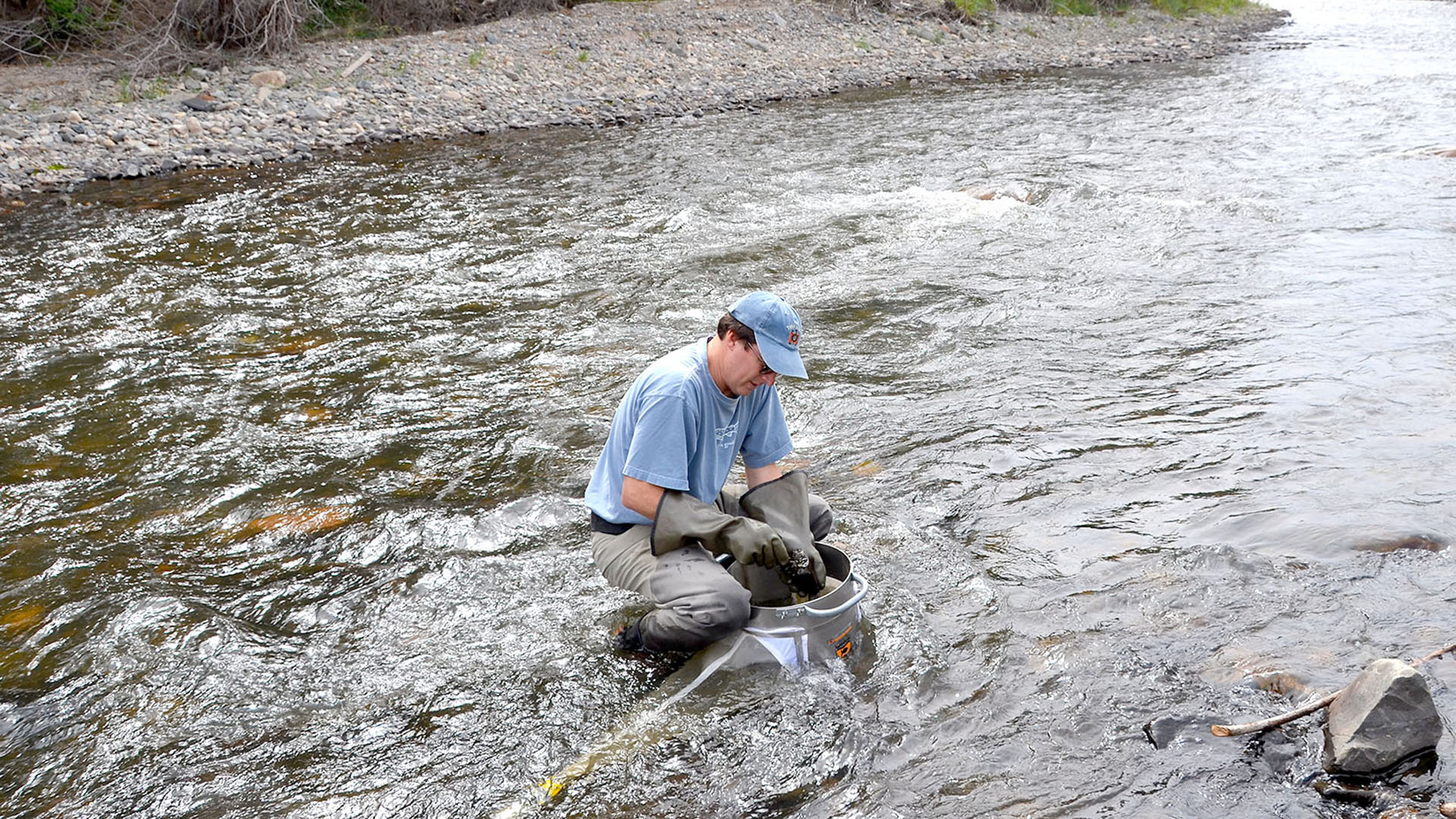
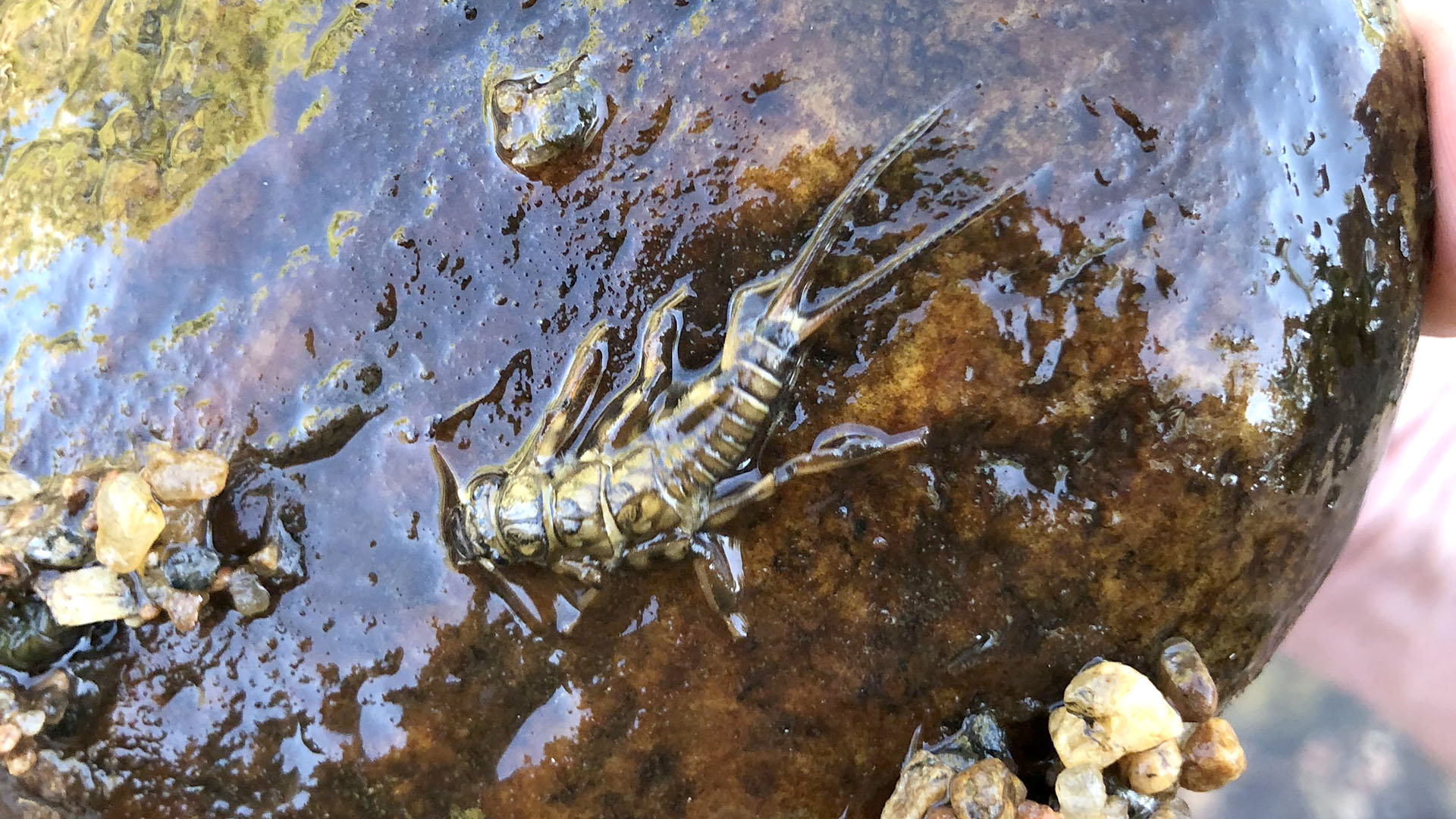
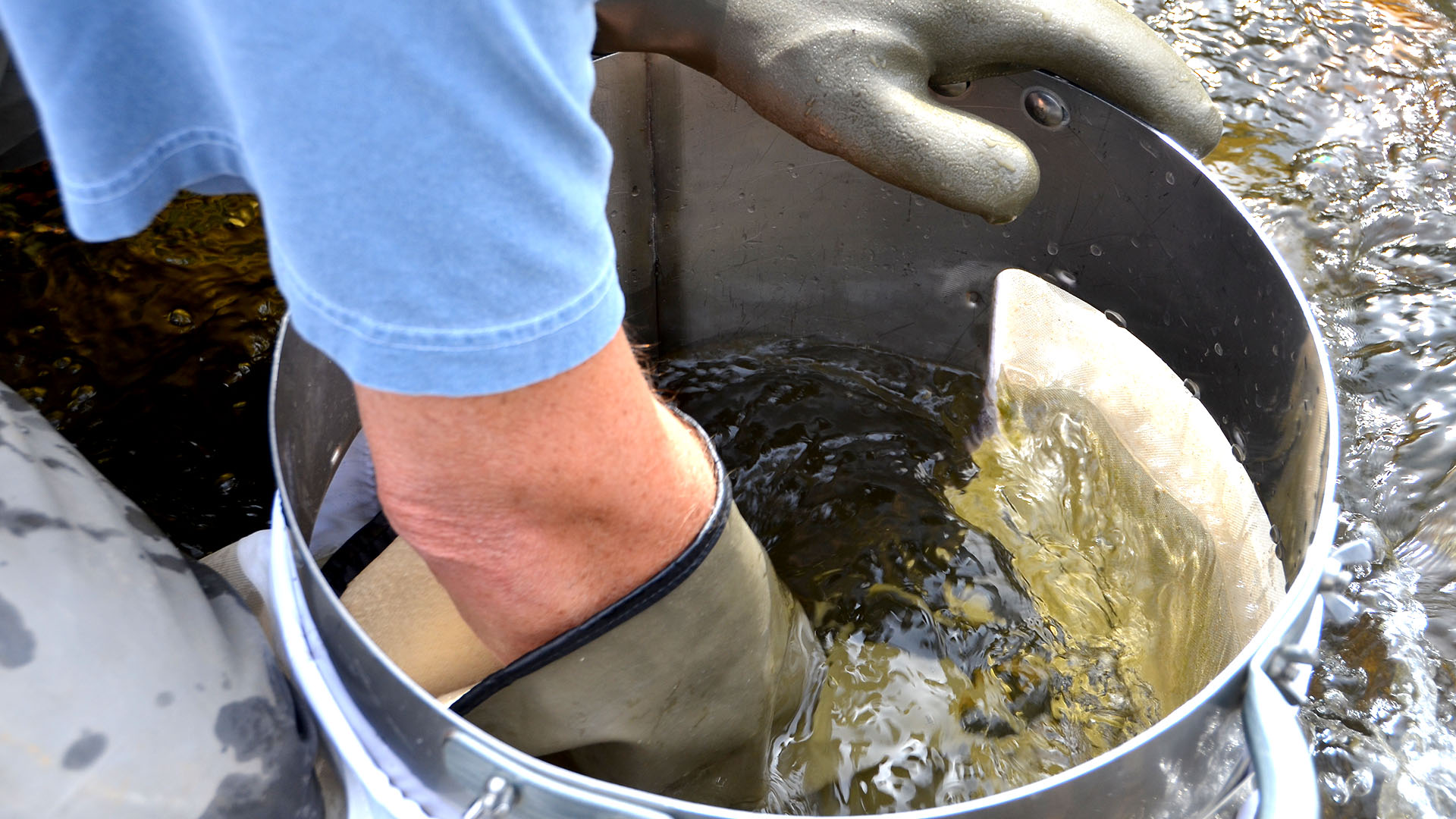
Macroinvertebrates, often called aquatic insects or aquatic bugs, are animals without backbones that live on the bottoms of streams and rivers. Common examples include mayflies, stoneflies, caddisflies, beetles and dragonflies. These organisms play a critical role in aquatic ecosystems by breaking down organic matter, recycling nutrients and providing an important food source for fish, amphibians and other wildlife. As a key link in the aquatic food web, healthy macroinvertebrate communities help support productive, resilient stream ecosystems.
Because macroinvertebrates spend most of their lives in the water and differ in their tolerance to pollution and habitat disturbances, they are widely recognized as one of the best indicators of stream health. Unlike water quality samples, which provide a snapshot of conditions at a specific time, macroinvertebrate communities integrate the effects of water quality, habitat conditions, streamflow and other environmental influences over months or years. Changes in the diversity and abundance of sensitive species can provide early warning of impacts from pollution, land use changes, urban development, habitat degradation, drought, wildfire or other environmental stressors.