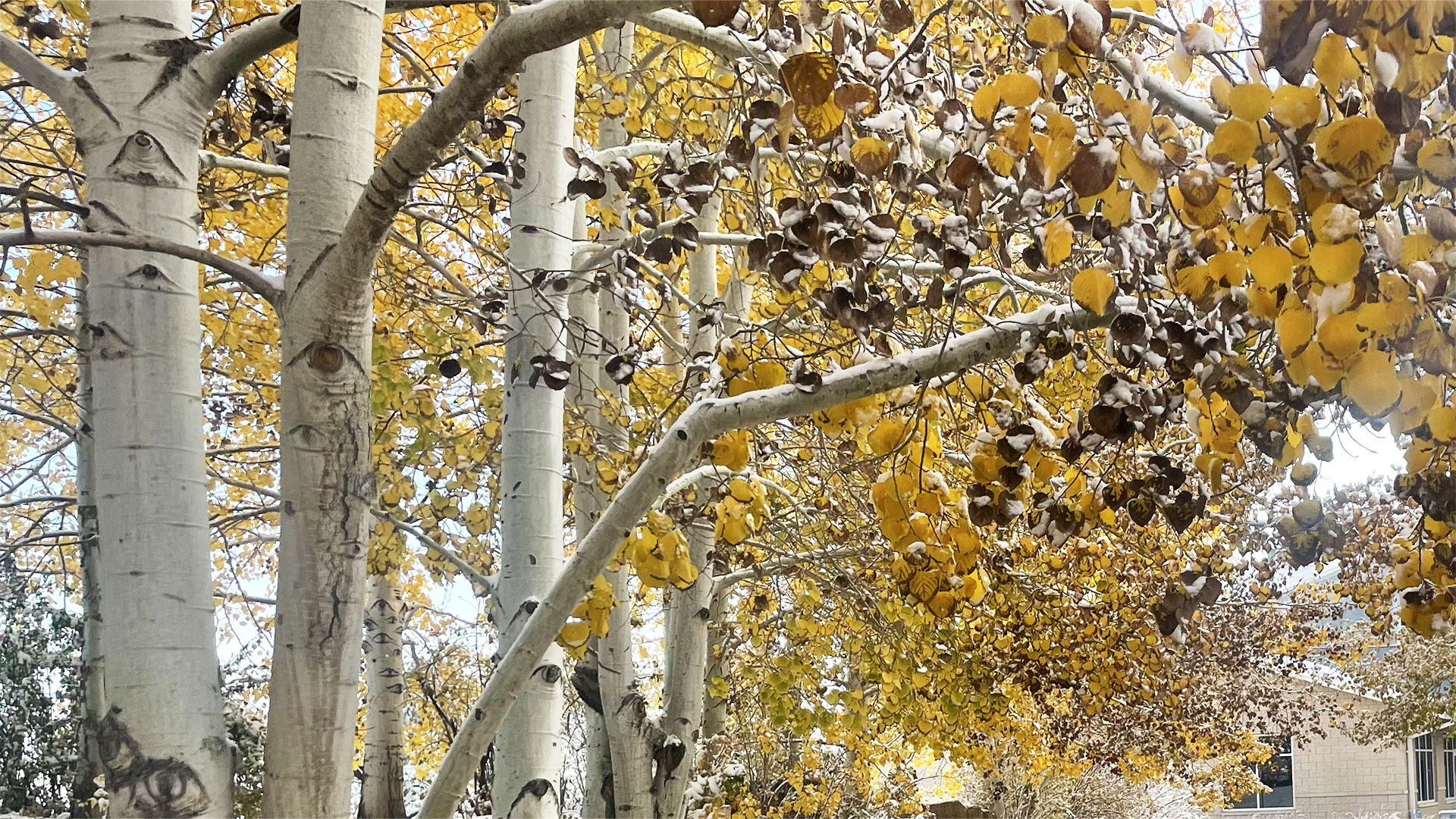
Colorado's warm, sunny winter days are great for spending time outdoors, but they can be tough on trees along the Front Range, especially during drought. Even trees native to Colorado may need supplemental winter watering because many native species naturally grow in areas with more moisture, such as higher elevations or riparian areas.
Follow these tips to keep trees healthy during the winter:
- Water during prolonged dry periods. Consider watering if there has been little or no precipitation for two weeks or more.
- Wait for temperatures above 40 degrees. If you can easily push a screwdriver into the soil, the ground is not frozen and it is safe to water.
- Water around midday so moisture has time to soak into the soil before temperatures drop.
- Cover a wide area. Most tree roots are in the top foot of soil and extend beneath and beyond the canopy. Water throughout this area, including out to the drip line.
- Water slowly and deeply. Apply 5 to 10 gallons of water per inch of tree diameter, depending on the species.
- Use mulch to retain moisture. Apply about 4 inches of mulch to bare soil within 2 to 3 feet of the trunk, keeping it from directly touching the trunk.
Winter drought can damage any plant if its roots become too dry, but recently planted trees and plants are especially vulnerable because their root systems are not yet fully established. Evergreens, including conifers and evergreen perennials, also need special attention because they retain their leaves or needles and continue to lose moisture during winter.
Pay attention to microclimates, as well. Trees on the south sides of buildings may receive additional reflected sunlight, causing the soil to warm and dry more quickly. Wind can also increase moisture loss from evergreen and dormant deciduous trees.
Continue watering as needed every few weeks during dry periods until consistent spring precipitation arrives.